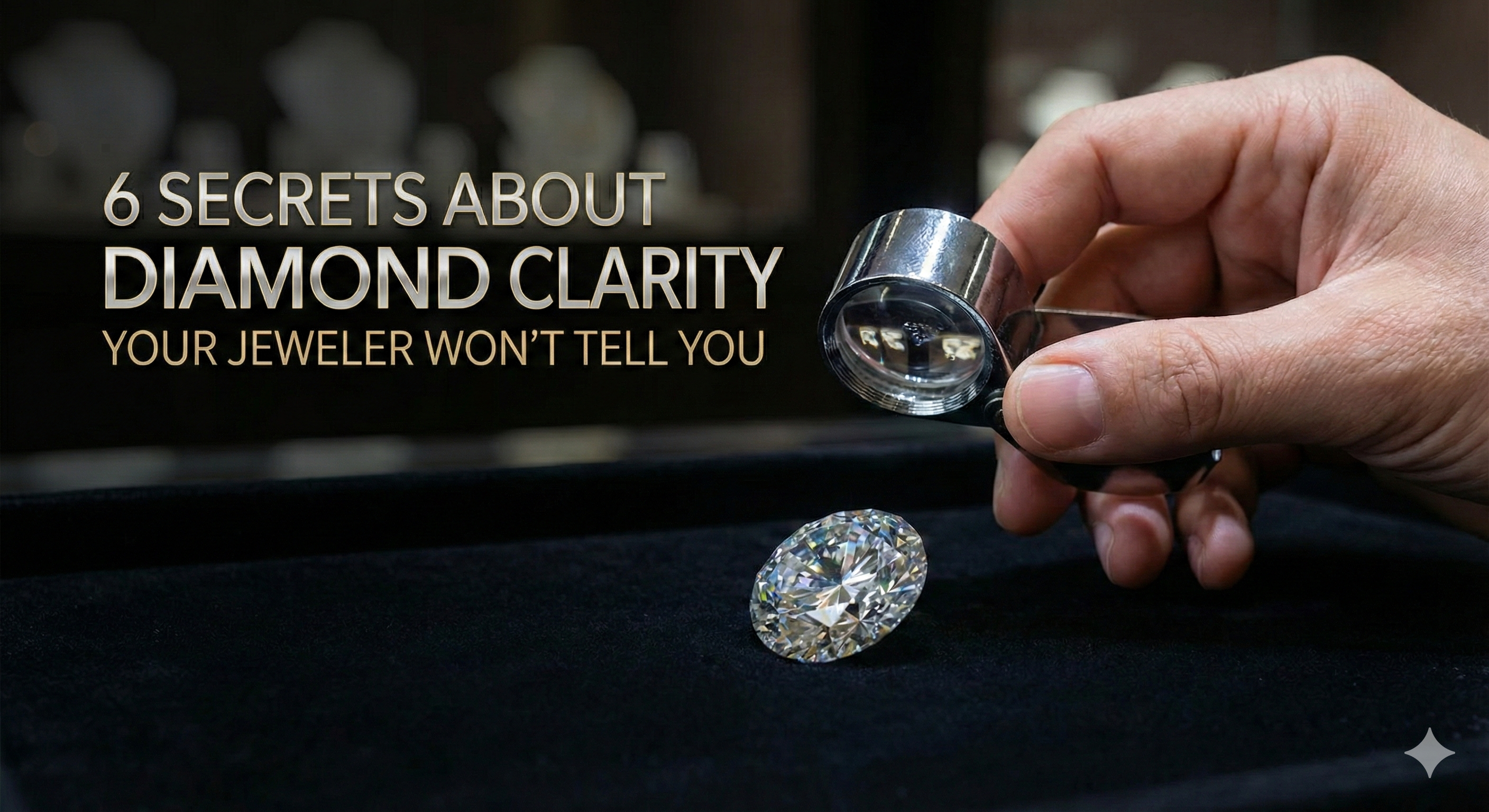
6 secrets about diamond clarity your jeweler won't tell you
A diamond certificate is just the starting point—it doesn’t reveal the full story. Most buyers think that higher clarity grades automatically mean a more beautiful diamond, but the truth is far more complex. Let's uncover the secrets jewelers don’t often share about diamond clarity, so you can make smarter, more informed decisions when shopping for your perfect stone.
1. Not all VS2 diamonds are created equal
Here’s a little-known fact: even within the same GIA clarity grade, there’s a massive range in quality. A VS2 diamond can technically qualify for its grade while having a glaring black inclusion in the center of the table—the most visible part of the stone.
This means you could end up with a diamond that technically sounds great on paper but looks dull and lifeless in person. The secret? Always examine the diamond or work with a jeweler who carefully curates for beauty, not just technical grades.
2. A higher grade doesn't always mean better
One of the industry's best-kept secrets is that a higher clarity grade, like VS1, doesn’t guarantee a better-looking diamond. A top-tier VS2 can look identical to a VS1 to the naked eye, but with a much lower price tag.
The secret to saving money? Focus on eye-clean diamonds rather than paying for microscopic perfection, and invest in a jeweler who knows how to spot the hidden gems within lower grades.
3. The "yucky" diamonds lurking in every grade
Here’s something your jeweler might not tell you: the majority of diamonds in any given clarity grade are far from perfect. Most VS2 diamonds, for example, have dark inclusions that distract from the sparkle. But a small percentage—what we call the “super nice” VS2s—are clean, bright, and stunning.
The secret? Ask your jeweler how they curate their diamonds. At M&B, we filter out the “yucky” ones with our 1-10 scale, so you’re only choosing from the top 5% of stones.
4. The hidden value of SI1 diamonds
SI1 diamonds often get overlooked because they’re considered a lower clarity grade. But here’s the secret: a premium SI1 with inclusions on the edge can look flawless to the naked eye and cost significantly less than a VS2.
Why overpay for an average VS2 when you can get a stunning SI1 at a better price? The key is working with a jeweler who knows how to find these hidden gems.
5. The real risk of buying blind
Another secret? Certificates don’t tell the whole story. A GIA report will tell you about a diamond’s inclusions, but it won’t reveal how they affect the stone’s overall appearance. For example, a small black inclusion in the center of the diamond will reflect throughout the stone, killing its sparkle—even if the certificate gives it a good grade.
The takeaway? Never buy a diamond based solely on the certificate. Always see it in person or work with a jeweler who prioritizes beauty over grades.
6. Clarity impacts resale value
Here’s a long-term secret most buyers don’t consider: a poorly chosen diamond with visible flaws can lose value over time. Stones with prominent inclusions are harder to resell, while rare, eye-clean VS2s and SI1s are highly desirable and hold their value.
Want a diamond that’s as smart an investment as it is beautiful? Choose one that’s carefully selected for visual appeal and market demand.
The bottom line
The world of diamond clarity isn’t as straightforward as it seems. Here’s what you need to remember:
- Not all diamonds within the same grade are equal—focus on beauty, not just clarity grades.
- A well-selected VS2 or SI1 can save you money without sacrificing visual quality.
- Certificates only tell part of the story—always work with a trusted jeweler who curates for brilliance.
Ready to uncover the hidden value in diamonds? Explore our collection of expertly selected stones and find your perfect match today.